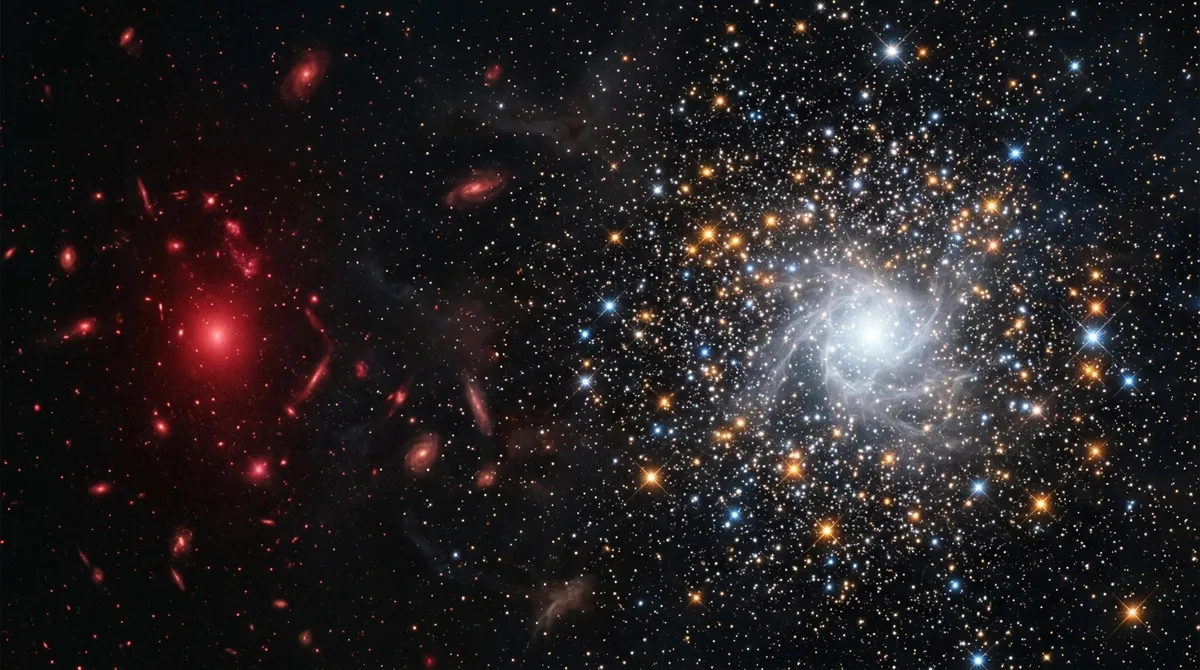
Astronomers recently proposed an intriguing theory linking the mysterious "Little Red Dots" observed by the James Webb Space Telescope (JWST) to the formation of ancient globular clusters. This theory, spearheaded by a team from The University of Texas at Austin, suggests that these compact objects from the early universe could be the very building blocks of globular clusters that we observe today.
What Are Little Red Dots?
Little Red Dots are enigmatic celestial phenomena first detected by the JWST. Their peculiar light and timing have puzzled astronomers since their discovery. The name reflects their appearance, but their significance goes far beyond mere visual allure. Understanding these objects could hold the key to some of the most fundamental questions about the early universe and the formation of star clusters.
Linking Little Red Dots to Globular Clusters
The research posits that Little Red Dots might represent globular clusters in the making. These massive star formations occur when young, supermassive stars are born inside star clusters. As the JWST peers back into cosmic history, it reveals a picture that challenges previous notions about star formation and cluster development.
The Role of Monster Stars
Central to this theory is the concept of "monster stars" — massive stars that live short, explosive lives. According to the researchers, these stars could produce chemical signatures that remain detectable billions of years later. Their violent deaths might release elements that enrich the subsequent generations of stars forming in similar clusters, feeding the cycle of cosmic evolution.
The Implications for Cosmic Evolution
If the connection between Little Red Dots and globular clusters holds true, it would answer two enduring questions in astronomy: what are these strange red objects, and how did the ancient globular clusters form? This hypothesis not only aids our understanding of stellar life cycles but also sheds light on the conditions in the early universe when the first stars began to light up the cosmos.
Preserving Clues from the Early Universe
Globular clusters are thought to be among the oldest relics of the universe, preserving the chemical fingerprints of the early stars that formed them. By examining the properties of the Little Red Dots, astronomers can uncover the environmental conditions that fostered their formation, allowing for a deeper understanding of our cosmic history. If JWST's observations support this theory, they could revolutionize our understanding of how the universe evolved from a dark, chaotic landscape into the rich tapestry of galaxies, stars, and clusters we see today.
Conclusion: A New Era for Astronomy
As JWST continues to unveil the mysteries of the universe, the link between Little Red Dots and the origins of globular clusters highlights the innovative thinking that drives modern astronomy. If substantiated, this theory could reshape our understanding of the formation of stars and galaxies. Keep an eye on future developments — the cosmos has more stories to tell, and we are just beginning to decipher them.