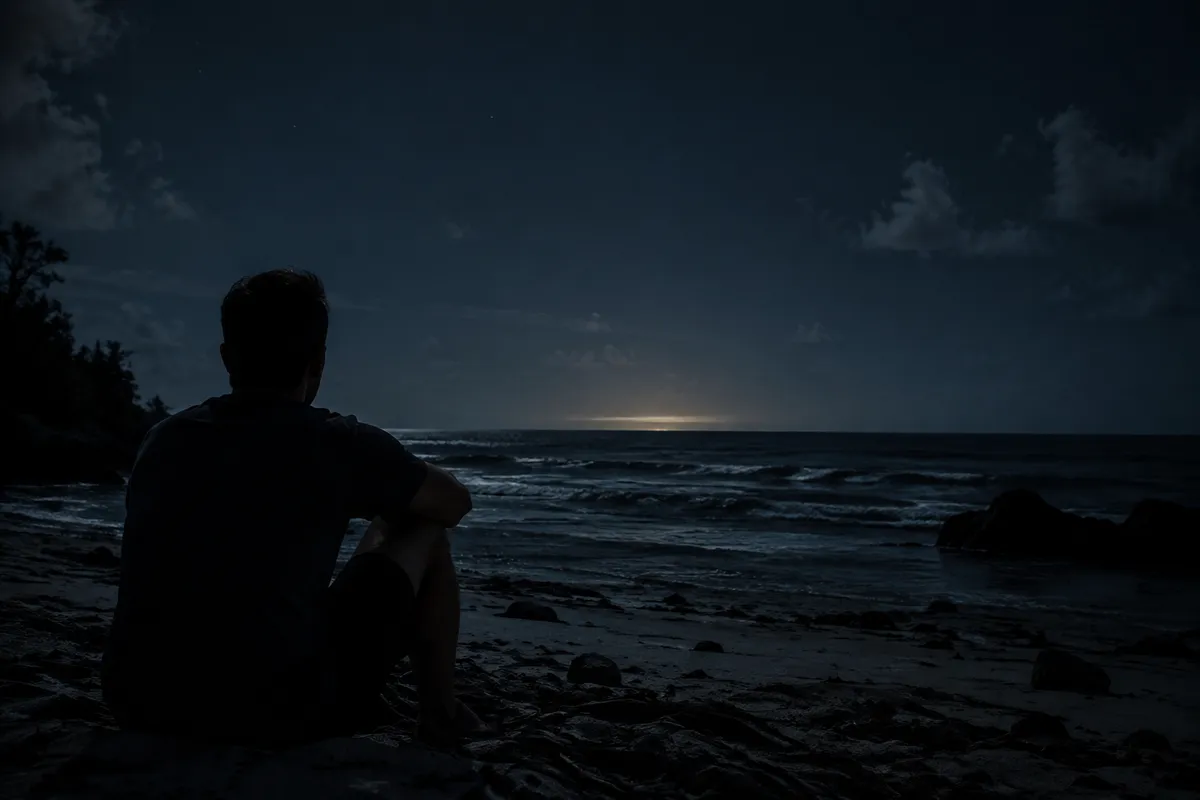
Your brain is a prediction machine, and a small island at the bottom of the Great Barrier Reef shows it in action. By the end of this article, you'll know why some visitors to Lady Elliot Island see a lighthouse beam that isn't there, and how to spot the same mental shortcut at work in your own everyday vision.
The mystery on Lady Elliot Island
Lady Elliot Island sits at the southernmost tip of Australia's Great Barrier Reef, and it has two lighthouses. The first was built in 1873. It was decommissioned in 1995, when the second took over the job, per the report from Phys.
The oddity is a third lighthouse that doesn't exist. According to Phys, new research explains the "phantom lighthouse" illusion, in which viewers perceive a nonexistent lighthouse beam on the horizon. It has long been a quirky tourist mystery, and the research now gives it a scientific explanation.
The short answer: your brain fills in the blanks
The study argues the effect comes from the brain combining two things: sparse nighttime visual cues, and expectations about distance and motion.
In other words, the beam isn't picked up by your eyes from some hidden source. Your brain builds it. When the evidence coming in is thin and ambiguous, your visual system leans on what it expects to see and produces a confident picture anyway.
Why darkness makes illusions stronger
At night, there's very little visual information to work with. A horizon in daylight offers plenty of cues: edges, textures, colors, relative sizes. In the dark, those cues mostly vanish.
That matters because perception is a blend of incoming signals and prior expectations. When the signals are rich, they keep your expectations in check. When they're sparse, expectations carry more weight. The phantom lighthouse is a good example of what can happen when the balance tips that way.
This is my own framing of the idea, not a claim from the study: think of it as a conversation where one speaker has gone quiet, so the other starts finishing their sentences.
Predictive perception, in plain terms
The researchers' work is being treated as a real-world example of predictive perception. The idea is that your brain doesn't passively record the world like a camera. It constantly guesses what's out there, then adjusts those guesses based on what your senses report.
Most of the time this is brilliant. It makes vision fast and efficient. But when the sensory evidence is ambiguous, the same system can fill gaps with something that feels completely real.
A lighthouse is a particularly good candidate for this kind of trick. Lighthouses are associated with a rotating or sweeping beam, so a person looking out at a dark horizon near one may bring strong expectations about distance and motion. Those expectations are exactly the ingredients the study points to.
A cousin of the crater illusion
The phantom lighthouse belongs to a family of famous visual tricks, including the crater illusion. In that one, the same image can flip between looking like a bowl-shaped crater and a raised dome, depending on how your brain interprets the shading.
The common thread is that your brain commits to one interpretation of ambiguous information and presents it to you as fact. You rarely feel the guesswork. You just see the result.
Why virtual reality matters here
Phys notes that the research arrives as virtual reality becomes a stronger tool for testing how people experience illusions outside the lab. That's useful for a phenomenon like this one. Reproducing a dark, remote horizon in a laboratory is hard, but VR offers a way to control what viewers see and study how they respond.
The report details available don't spell out how the study used VR, so it's best to treat that as a direction the field is moving rather than a description of this particular experiment.
Spot your own brain's shortcuts
You don't need to travel to the Great Barrier Reef to catch your mind doing this. A few ways to notice it:
- Look at a crater image. Search for a photo of a lunar crater, then turn it upside down. Watch the bowl become a dome.
- Stare at a dim scene. In a dark room, notice how shapes in your peripheral vision shift into things you expect, like a coat on a chair becoming a figure.
- Pay attention to distant lights at night. A single point of light with no reference around it is hard to judge for distance or movement. Your brain will pick an answer anyway.
None of these require special equipment, and each shows the same principle: when information is limited, your brain supplies the rest.
What the lighthouse really teaches
It's tempting to file the phantom lighthouse under "spooky tourist tale." The research suggests a better reading. The beam is a window into how seeing works for everyone, all the time.
The next time you look out into the dark and think you see something, treat it as a prompt. Ask what your brain expected, and what your eyes actually gave it. That gap is where illusions live, and noticing it is the first step to understanding your own perception.