Researchers from Science Tokyo have made a significant advancement in the field of organic electronics by demonstrating that self-assembling, anthracene-based supramolecular nanofibers can facilitate exciton transport over impressive distances. Unlike typical organic semiconductors that struggle with exciton mobility, these innovative nanofibers allow excitons to migrate hundreds of nanometers, potentially reshaping the landscape of devices like solar cells and LEDs.
Understanding Excitons and Their Importance
Excitons are bound states of electrons and holes, playing a crucial role in the efficiency of organic semiconductors. In applications such as solar cells, the ability of excitons to move efficiently directly impacts the amount of energy harvested. Unfortunately, traditional organic materials often suffer from limited exciton diffusion, which can stall device performance. This study reveals a new approach to enhance that mobility, opening doors to improved optoelectronic applications.
The Breakthrough: Nanofibers and Nanohole Substrates
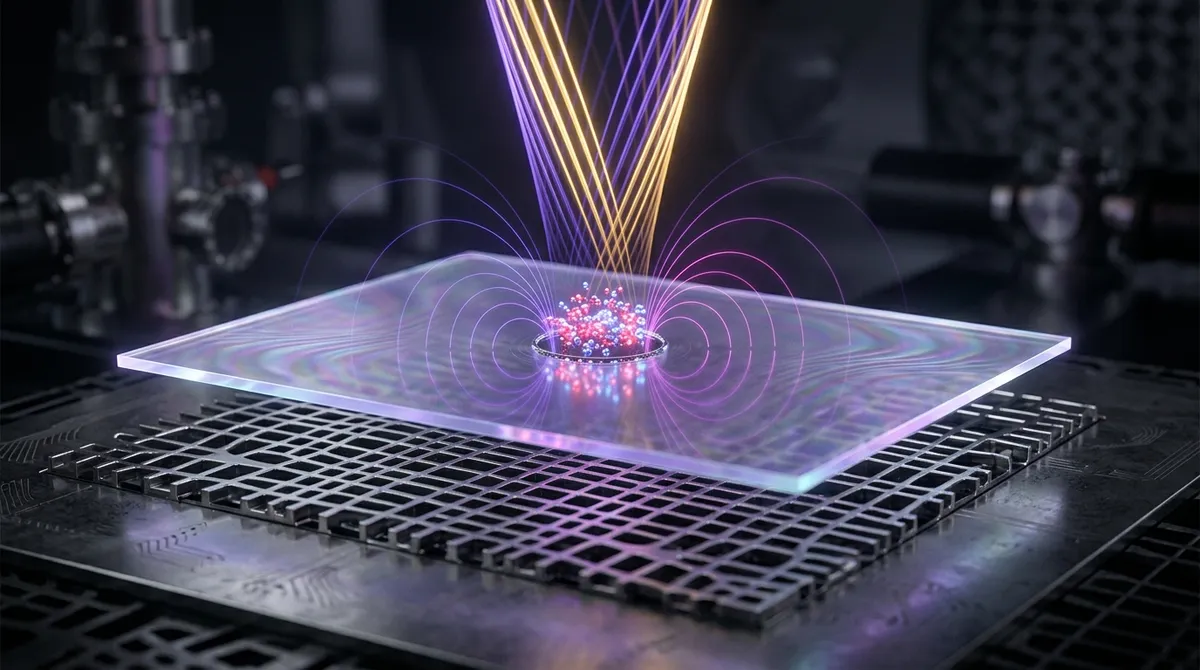
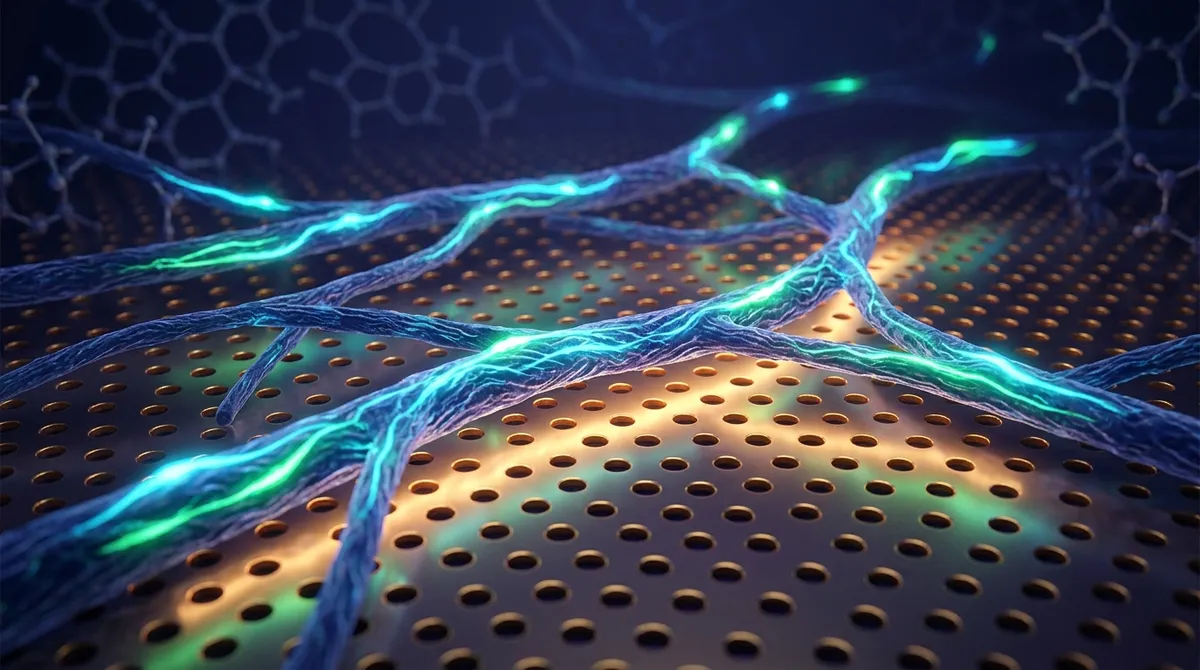
By pairing anthracene-based supramolecular nanofibers with plasmonic gold nanohole substrates, researchers were able to more than double exciton diffusivity. This unique combination not only enhances the distance that excitons can travel but also enables what researchers describe as “molecular highways.”
How do Molecular Highways Work?
Think of these nanofibers as corridors for energy particles. When excitons traverse these highways, they encounter significantly less resistance, allowing for longer-distance diffusion before losing energy. Adding the gold nanohole substrates introduces plasmonic effects — manipulating light at the nanoscale, which further elevates the energy transfer efficiency.
Why This Matters Now
With the growing demand for efficient and flexible optoelectronic devices, advancements like these come at a critical time. Exciton management remains a bottleneck in the development of next-generation technologies, including solar panels and LEDs. As research continues to unearth methods to improve exciton transport, the potential for creating lightweight, efficient electronics becomes a reality.
Future Implications in Electronics
The implications of this research extend beyond just enhancing organic materials. The combination of self-assembling nanofibers and plasmonic substrates could lead to innovations in various applications, from flexible electronics to advanced sensor technology. Engineers and designers can look forward to utilizing these findings to construct devices with increased efficiency, reduced energy loss, and perhaps even new functionalities.
In conclusion, the coupling of supramolecular nanofibers with gold nanohole substrates marks a noteworthy leap in the pursuit of better performing organic electronics. This work lays a foundation for future research aimed at overcoming the longstanding challenges posed by exciton transport. Keep an eye on this space, as these 'molecular highways' could redefine what's possible in the world of efficient electronics.