The sun, at the heart of our solar system, plays a defining role in shaping Earth’s climate. Recent studies linked to NASA reveal how the sun's tumultuous youth, characterized by powerful superflares, and its galactic journey have deeply influenced the planet's environment. This understanding not only expands our knowledge of Earth’s past but also has implications for searching for life elsewhere in the universe.
The Influence of Superflares on Early Earth
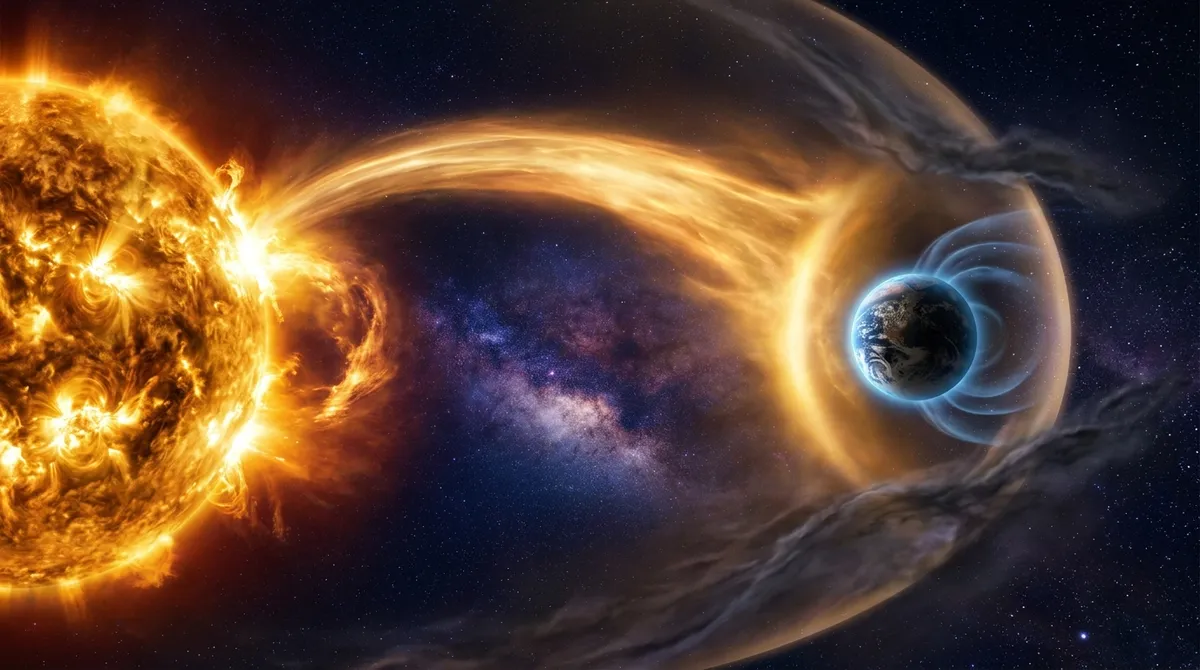
In the early stages of its existence, our sun was no gentle star. It was a hotbed of activity, erupting with superflares—intense bursts of energy that dwarf typical solar flares. These massive events had profound effects on the early Earth, potentially flooding the atmosphere with greenhouse gases. These gases, in turn, acted as a thermal blanket, warming the planet and preventing it from freezing.
Studies suggest that instead of the planet being a cold, barren world, these early greenhouse gases might have created hospitable conditions for the beginnings of life. By warming the atmosphere, the sun’s superflares could have supported liquid water on the surface, a crucial ingredient for life as we know it.
Exploring the Galactic Context
But the sun's influence on Earth doesn't stop with superflares. The second study emphasizes the importance of the sun's galactic journey. As our sun orbits the Milky Way, it passes through different regions of the galaxy, encountering interstellar clouds that fluctuate in density and composition. These cosmic clouds can shower planets with materials that support habitability.
During certain periods, Earth's exposure to these materials may have bolstered its atmospheric composition, adding to the greenhouse effect initiated by the superflares. Such galactic travels may have triggered significant climate shifts, possibly leading to ice ages or periods of warmth—factors crucial for understanding Earth's climatic evolution through time.
Implications for Exoplanet Habitability
Understanding the dual influence of furiously active solar behavior and galactic movement reshapes how scientists approach astrobiology and the search for exoplanets. It’s not only about finding Earth-like planets but also examining the nature of their stars, as the sun’s behavior could similarly dictate the climates of distant worlds.
In light of these studies, researchers now consider that the prospects of life on exoplanets may hinge as much on stellar activity—like superflares and the subsequent radiation environments—as they do on the planets themselves. This insight reinforces the idea that astrobiological potential is a multi-faceted issue encompassing not just the planets but the entire solar system context.
Conclusion
The current knowledge about how our sun's tumultuous past shaped Earth's climate invites you to rethink the conditions necessary for habitability. As we venture into the quest for life beyond Earth, we bear in mind that stellar activity and galactic context will be crucial factors to consider. The sun's history may not only tell us about our world but informs our understanding of possibilities elsewhere in the universe.