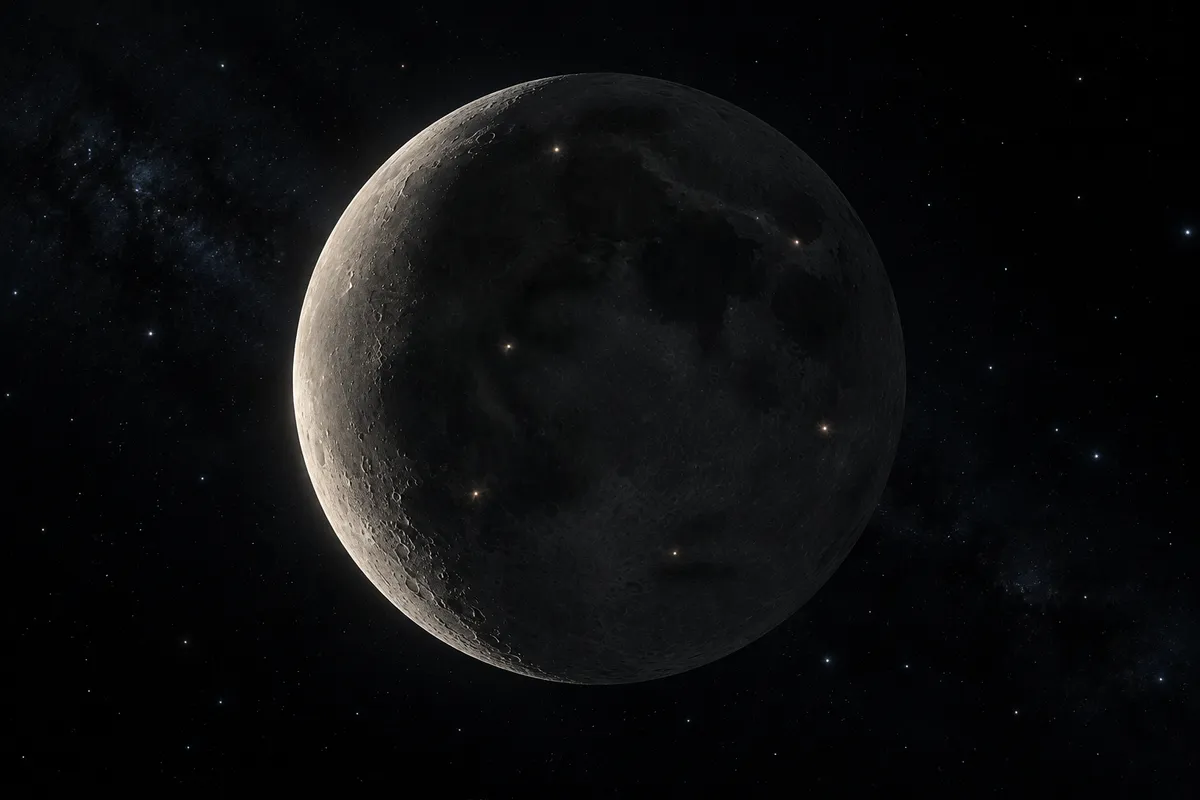
NASA has released annotated imagery from the Artemis II mission, and one detail stands out: the crew reported seeing five faint "pinprick" bursts of light on the moon, caused by rocky fragments striking the surface. By the end of this article, you'll know what those flashes are, why a human observer in deep space can add real science, and what to look for in the newly public data.
What the crew saw
Per Phys, the annotated image is a screenshot dated April 6, 2026, from an Artemis II crew member's tablet. It shows a visualization of a dark moon eclipsing the sun, marked up with handwritten notes. According to the report, NASA says astronauts observed five faint flashes, each described as a pinprick, and attributes them to rocky fragments hitting the lunar surface.
The full lunar science data set from the mission is now available for public and scientific study, according to the same report.
What causes a flash on the moon
The explanation NASA gives is simple: a piece of rock strikes the moon, and the impact produces a brief burst of light. The moon has no thick atmosphere to slow incoming debris, so fragments can reach the surface directly. (That's general background, not a detail from the release.)
That's why the flashes were so small and quick. A pinprick is what you'd expect from a modest rocky fragment, not a large asteroid. The source material doesn't give sizes, speeds, or locations for the five events, so those specifics remain open questions for researchers digging into the data.
Why the dark side of an eclipse view helps
The annotated image shows the moon passing in front of the sun, leaving the lunar disk dark. It's hard to say from the released description exactly how the eclipse geometry helped the crew, but it's easy to see the general logic: faint flashes are far easier to spot against a dark surface than a sunlit one. Treat that as our reasoning, not a stated finding from NASA.
Why astronaut eyes still matter
Spacecraft carry cameras and sensors, so why note flashes by hand? Because people can notice something unexpected, react in real time, and mark it up on the spot. The handwritten notes on the tablet screenshot are a neat illustration of that. Phys frames the observations as a case of astronauts contributing real-time science from deep space.
For a mission whose headline job is testing systems and carrying humans around the moon, field observations like this are a bonus layer of science.
Why the public data release is the real story
The flashes make a great hook, but the bigger point is access. With the full lunar science data set open for public and scientific study, anyone can examine what the crew recorded, not just the highlights NASA chooses to show.
If you want to engage with it, here's a practical approach:
- Start with the annotated image. Read the handwritten notes and see what the crew chose to flag.
- Count the events. Five flashes is the reported number; check whether the data supports that tally.
- Look for what's missing. Details like timing and location are what researchers will want most.
What this means for future moon landings
Artemis II is described as a major step in returning humans to lunar exploration. Impact flashes matter in that context because debris strikes are part of the environment future crews will work in. How often they happen, and how bright they look to human eyes, is useful knowledge before anyone lands. Whether five flashes is typical or unusual isn't something the released material answers, so watch for follow-up analysis.
Your next step
Open the released Artemis II lunar imagery and look at that annotated eclipse screenshot yourself. Five tiny flashes, marked by hand by people who were really there, are an invitation to see how the science gets done.