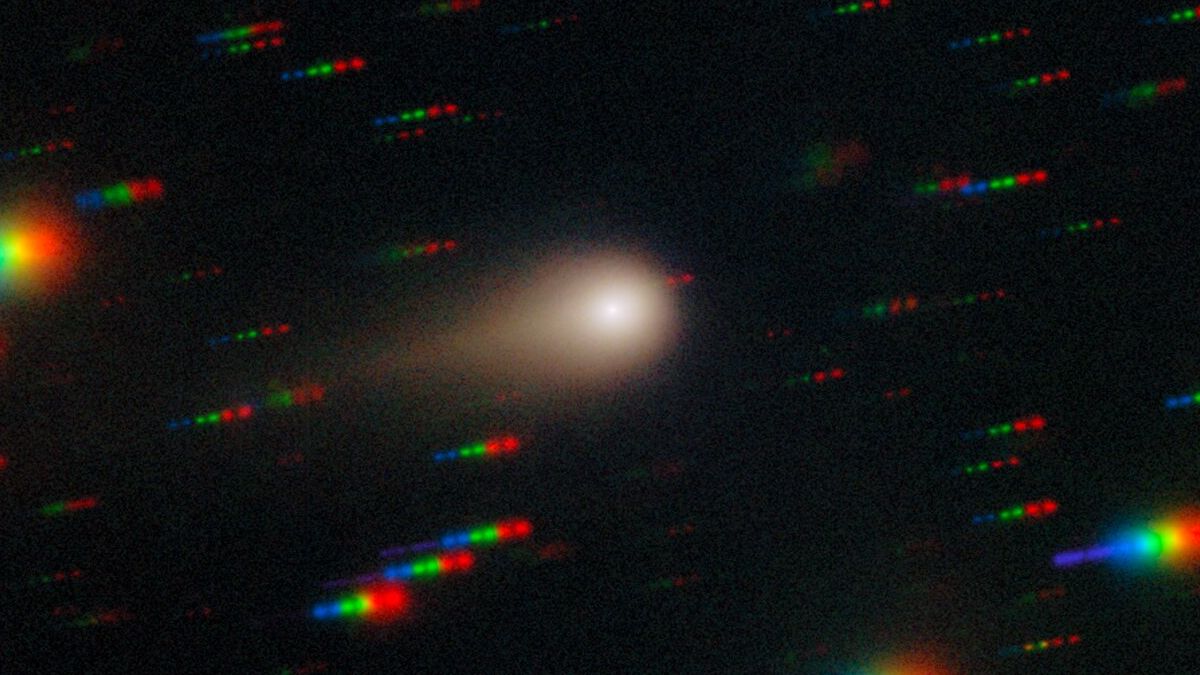
In recent astronomical observations, a peculiar object identified as 3I/ATLAS has sparked the curiosity of scientists and space enthusiasts alike. While some might speculate about extraterrestrial origins, this interstellar visitor is more intriguing for its natural rarity and the insights it could provide into the cosmos.

Understanding 3I/ATLAS
3I/ATLAS is classified as an interstellar object, which means it originated from outside our solar system. These objects are quite rare, with only a few having been detected so far. Their study gives astronomers valuable information about the conditions and materials present in other star systems.
The Journey of 3I/ATLAS
Discovered as it was traversing through our solar system, 3I/ATLAS follows the path of its predecessors, like the famous ‘Oumuamua and Borisov. These objects travel at high velocities, making their detection and study challenging yet rewarding. The trajectory of 3I/ATLAS suggests it is not gravitationally bound to any star, allowing it to travel freely across the galaxy.
What Makes 3I/ATLAS Unique?
Unlike other interstellar objects, 3I/ATLAS displays unusual characteristics that have captured the attention of scientists worldwide. Its composition and behavior differ from typical comets and asteroids within our solar system. This uniqueness could provide new insights into the diversity and evolution of celestial bodies in the universe.
Composition and Structure
Initial observations suggest that 3I/ATLAS may have a different composition compared to known solar system bodies. Understanding its structure can reveal clues about the building blocks of distant planetary systems. This information is crucial for piecing together the history and formation of our own solar neighborhood.
The Importance of Studying Interstellar Objects
Studying objects like 3I/ATLAS is important for several reasons. Firstly, they offer a glimpse into materials that formed around other stars, providing a basis for comparisons with our solar system. Secondly, they help refine our models of planetary formation and evolution. Lastly, these objects can potentially carry organic compounds, offering clues about the origins of life in the universe.
Technological Advances in Astronomy
The detection of 3I/ATLAS was made possible by advancements in telescopic technology and data analysis. These tools allow astronomers to identify and track fast-moving objects, thereby enhancing our understanding of interstellar visitors. Future technological developments will further improve our ability to study these fleeting phenomena.
Conclusion
While 3I/ATLAS is not an alien spacecraft, its presence and peculiarities are a testament to the rich tapestry of the universe. By examining such objects, scientists can unlock secrets of the cosmos, shedding light on the dynamics of distant worlds and the potential for life beyond Earth. As we continue to explore, each discovery adds a new chapter to the story of our universe.
#space #astronomy #interstellar #cosmos #science