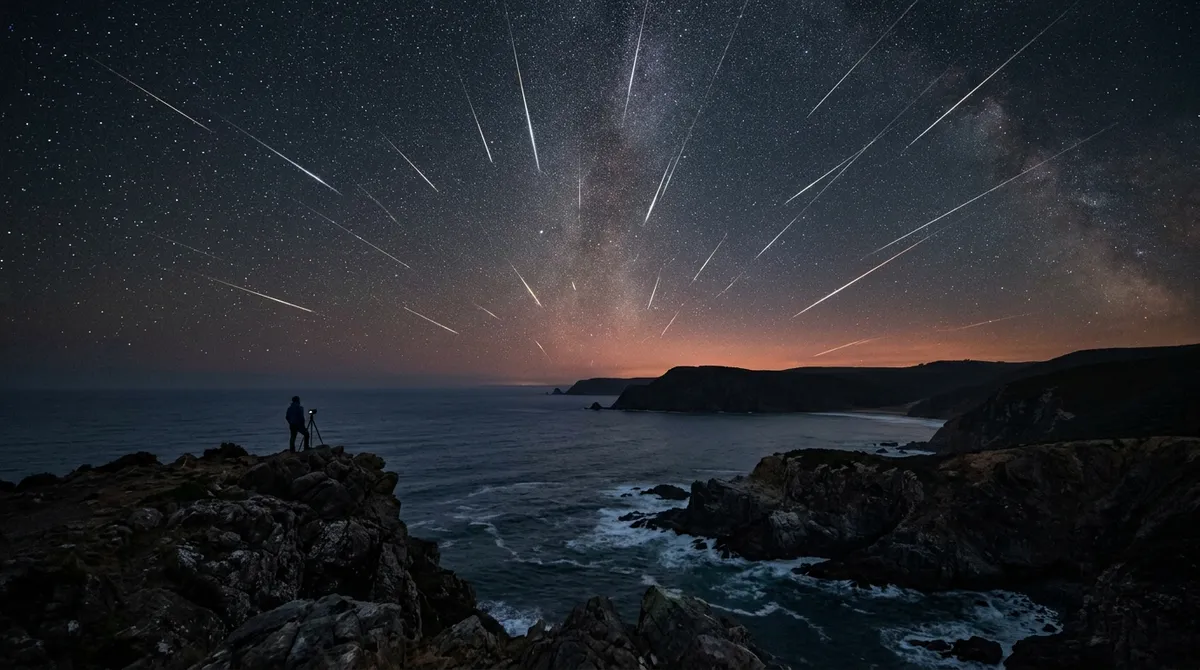
As the Earth journeys through the cosmic debris left by Halley's Comet, stargazers are in for a celestial treat. The Eta Aquariid meteor shower, known for its swift and bright meteors, is set to dazzle the night sky soon.
What Makes the Eta Aquariid Special?
Every year, from late April to mid-May, the Eta Aquariid meteor shower lights up the night sky. This shower is renowned for its speed, with meteors zipping through the atmosphere at an impressive 66 kilometers per second. Such velocity makes the meteors appear as bright streaks, often leaving glowing trails in their wake.
The Eta Aquariid is particularly visible in the Southern Hemisphere, where observers can witness up to 50 meteors per hour at its peak. In contrast, those in the Northern Hemisphere might see around 10 meteors per hour. However, this doesn't diminish the spectacle, as the meteors' brightness and speed offer a breathtaking display.
Best Viewing Practices
To maximize your meteor shower experience, timing and location are crucial. The shower peaks in the pre-dawn hours, so early risers will have the best chance to catch the show. Find a spot far from city lights for the clearest view of the meteors streaking across the sky.
Give your eyes about 20 minutes to adjust to the darkness. This adjustment period allows you to see even the faintest meteors. No special equipment is necessary; just look up and let the cosmos put on its show.
The Science Behind the Shower
The Eta Aquariid meteor shower originates from the remnants of Halley's Comet. As the comet orbits the Sun, it leaves behind a trail of dust and debris. When Earth passes through this trail, the debris enters our atmosphere, burning up and creating the stunning meteor shower we observe.
Halley's Comet, named after astronomer Edmond Halley, is perhaps the most famous comet. It appears in Earth's skies every 76 years, with its last appearance in 1986 and the next one expected in 2061. The debris from its tail continues to impact our atmosphere, resulting in both the Eta Aquariid and the Orionid meteor showers.
Historical Significance
Meteor showers like the Eta Aquariid have a rich history, inspiring awe and wonder across cultures. Ancient civilizations often regarded these celestial events as omens or messages from the gods. Today, they serve as reminders of our connection to the universe and the ongoing dance of celestial bodies.
For astronomers, meteor showers offer more than just beauty. They provide valuable data about comets and the solar system's history. By studying the composition and behavior of meteors, scientists can glean insights into the early solar system's conditions.
Looking to the Future
As we look to the skies for this year's Eta Aquariid meteor shower, it is a moment to reflect on our place in the cosmos. While the meteors we see are fleeting, the history and science they represent are enduring.
Each meteor is a tiny piece of a larger cosmic puzzle, reminding us of the vastness of space and the wonders it holds. So, as you gaze up, consider the journey these particles have taken and the stories they tell.
Whether you're a seasoned astronomer or a curious observer, the Eta Aquariid meteor shower is a must-see event. Mark your calendar, set your alarm, and prepare to be amazed by nature's celestial light show.
In the grand scheme of the universe, such events remind us of our interconnectedness and the beauty that lies beyond our world. Enjoy the show and let your imagination soar.