Breakthrough in Conservation Biology
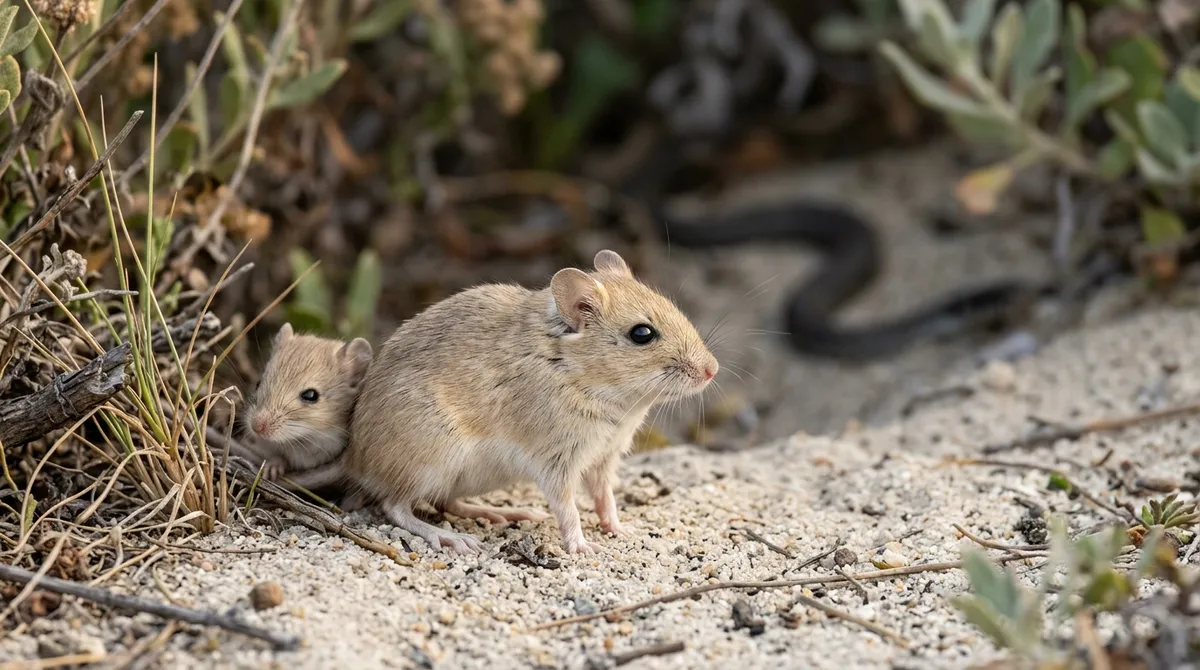
Scientists at San Diego Zoo Wildlife Alliance have made a groundbreaking discovery that could revolutionize how we prepare endangered animals for life in the wild. Their research on critically endangered Pacific pocket mice reveals that pregnant mothers trained to fear snakes can pass that learned fear directly to their female offspring—marking the first time such maternal predator training inheritance has been documented in an endangered mammal.
The findings offer promising new approaches for conservation breeding programs, which have long struggled with a fundamental challenge: captive-bred animals often lack the predator awareness needed to survive once released into natural habitats.
Sex-Specific Fear Inheritance
According to reports, the research uncovered a surprising sex-specific pattern in how this learned fear transfers from mother to offspring. Only female offspring displayed the inherited vigilant behavior around predators, while males showed no such response. This discovery raises intriguing questions about the relationship between stress, gender, and behavioral inheritance in animal populations.
The female offspring who inherited their mothers' snake fear demonstrated notably more cautious and alert behaviors when encountering potential threats, suggesting the maternal training created lasting behavioral changes that could improve survival rates in the wild.
Scaling Conservation Efforts
This breakthrough could transform endangered species reintroduction programs by offering what researchers describe as a more efficient alternative to traditional antipredator training. Instead of the labor-intensive process of individually training every animal before release, conservation programs could focus their efforts on pregnant females, potentially reaching multiple offspring through a single training intervention.
For critically endangered species like the Pacific pocket mouse, which sits on the brink of extinction, such efficiency gains could be crucial for scaling up conservation efforts while reducing program costs.
The Mystery of Transmission
While the inheritance effect is clear, scientists still don't fully understand the mechanism behind this maternal-to-offspring fear transfer. According to reports, researchers have identified three competing hypotheses for how the learned fear passes from mothers to their daughters:
- Prenatal hormones: Stress hormones in pregnant mothers might influence fetal brain development
- Maternal behavior: Trained mothers may exhibit different caregiving behaviors that teach fear responses
- Odor cues: Chemical signals from fearful mothers could condition offspring responses
Unraveling which mechanism—or combination of mechanisms—drives this inheritance will be crucial for applying these findings to other endangered species.
Conservation Game-Changer
The Pacific pocket mouse serves as an ideal test case for this research, representing one of North America's most endangered mammals. Conservation breeding programs for this species have faced the typical challenges of preparing captive-raised animals for wild predators, making the maternal training approach particularly valuable.
According to reports, endangered species reintroduction programs have historically struggled because captive-bred animals lack the predator awareness essential for survival. This new approach could improve survival rates without requiring the extensive individual training that has made such programs resource-intensive and difficult to scale.
Broader Implications
The discovery opens questions about whether this maternal-learning model could work across other endangered mammal species. If the mechanism proves applicable to other animals, it could fundamentally change how conservation biologists approach predator training in breeding programs worldwide.
The research highlights the sophisticated ways animals can pass crucial survival information to their offspring, even when that information was acquired through human intervention rather than natural experience. This intersection of learned behavior, inheritance, and conservation biology represents a new frontier in endangered species recovery efforts.
As conservation programs worldwide face increasing pressure to improve success rates while managing limited resources, this maternal training approach offers hope for more effective and scalable solutions to one of conservation biology's persistent challenges.