
Revolutionary Findings Challenge Our Understanding of Ape Intelligence
After two decades of groundbreaking research, scientists at Leipzig Zoo's Wolfgang Köhler Primate Research Centre have unveiled remarkable insights about great ape cognition that challenge long-held assumptions about primate intelligence. According to reports, their findings suggest that apes exhibit decision-making processes and social behaviors that mirror human cognition in unexpected ways.
The research has culminated in EVApeCognition, a standardized database containing 18 years of experimental data, providing an unprecedented window into how great apes think, cooperate, and interact socially.
Social Gossip Trumps Food Rewards
One of the most surprising discoveries involves what motivates great apes. According to the research, great apes actively seek social gossip over food rewards, revealing fundamental insights about primate priorities. This finding suggests that social information may be more valuable to these intelligent creatures than immediate physical needs.
The implications of this discovery extend beyond basic behavioral understanding. It indicates that great apes possess a sophisticated social intelligence that prioritizes community knowledge and relationships over individual survival instincts in certain contexts.
Personality and Relationships Drive Cooperation
The Leipzig Zoo research has also revealed that cooperation and conflict resolution among great apes are driven by personality traits and relationship history rather than simply momentary moods. According to reports, this finding demonstrates a level of social complexity previously underestimated in primate research.
This discovery suggests that great apes maintain long-term social memories and make decisions based on past experiences with specific individuals, much like humans do in their social relationships.
The Captivity Effect on Cognitive Development
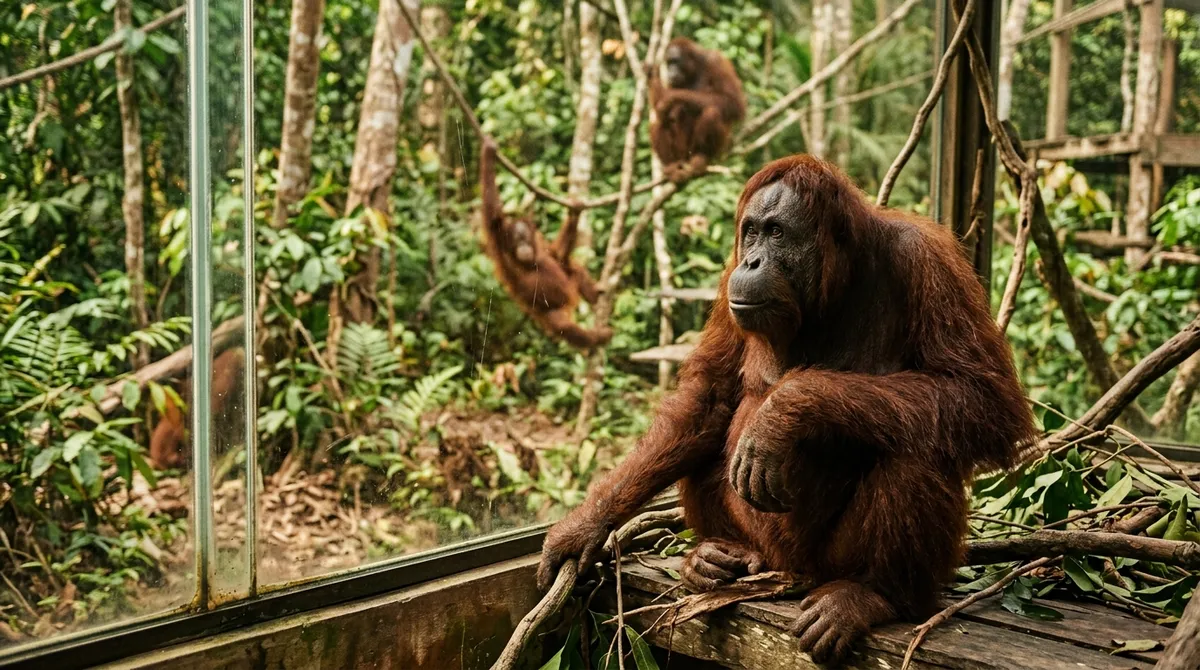
Researchers have identified what they term the "captivity effect," where wild apes demonstrate more cautious behavior compared to their zoo-housed counterparts. According to the findings, this suggests that environment significantly shapes cognitive development and behavior patterns in great apes.
This observation has profound implications for both conservation efforts and the ethical treatment of captive apes, as it indicates that living conditions can fundamentally alter how these animals think and behave.
Evidence-Based Belief Systems
Perhaps most remarkably, the research shows that chimpanzees update their beliefs in a manner similar to humans, carefully weighing evidence strength before changing their minds. This cognitive flexibility demonstrates sophisticated reasoning abilities that parallel human decision-making processes.
According to reports, chimpanzees at Leipzig Zoo have been observed using touchscreen controls to navigate virtual forests and locate food rewards, showcasing their ability to adapt to complex technological interfaces while maintaining their natural problem-solving instincts.
Methodological Revolution in Primate Research
The field of great ape research is undergoing what researchers describe as a methodological revolution. Scientists are shifting away from studying apes in pairs toward larger-group studies that better reflect natural social dynamics. This approach is closing the gap between captive and wild research settings, providing more authentic insights into ape behavior.
According to the research, studying apes in groups rather than pairs reveals their true social intelligence, as it allows researchers to observe the complex web of relationships and social hierarchies that exist in natural ape communities.
Implications for Conservation and Captive Care
The timing of these discoveries is particularly significant as conservation efforts and ethical standards for captive apes increasingly depend on understanding their true cognitive and social needs. The research suggests that great apes require more complex social environments and mental stimulation than previously recognized.
These findings are reshaping how scientists, conservationists, and zoos approach the care and study of great apes, emphasizing the importance of social context in maintaining their psychological well-being.
Looking Forward
The two decades of research from Leipzig Zoo represents a paradigm shift in primatology, revealing that great apes possess cognitive abilities and social complexities that closely parallel human intelligence. As researchers continue to analyze the EVApeCognition database, new insights about our closest relatives continue to emerge, deepening our understanding of both ape and human cognition.
This research not only advances scientific knowledge but also reinforces the critical importance of protecting great ape populations and ensuring their cognitive and social needs are met in both wild and captive environments.