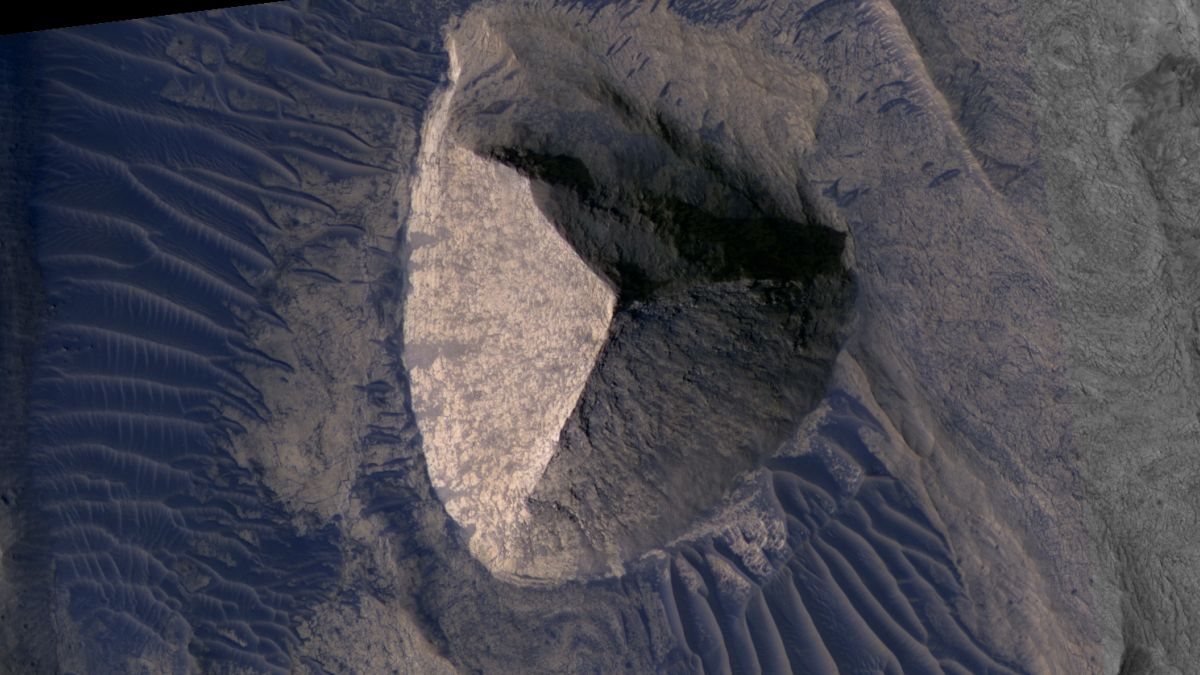
NASA has recently encountered a significant setback as it lost contact with its Mars Atmosphere and Volatile EvolutioN (MAVEN) spacecraft. This unexpected communication gap has raised concerns about the future of the mission, which is crucial for studying the Martian atmosphere. MAVEN, launched to explore and understand the upper atmosphere of Mars, plays a vital role in NASA’s ongoing research efforts.

The Importance of MAVEN
The MAVEN mission, part of NASA’s Mars Exploration Program, was designed to investigate the Red Planet’s atmospheric composition and dynamics. By examining how Mars’ atmosphere interacts with solar wind and other cosmic factors, MAVEN provides insights into climate change and atmospheric loss. This data is essential for understanding the historical transformation of Mars from a potentially habitable environment to its current barren state.
How MAVEN Operates
MAVEN orbits Mars in an elliptical path, allowing it to study both the upper and lower atmospheres. The spacecraft is equipped with a suite of scientific instruments that measure atmospheric particles, solar winds, and magnetic fields. These tools enable MAVEN to gather data crucial for modeling the Martian atmosphere and predicting future atmospheric behavior, which is imperative for planning human exploration missions to Mars.
Communication Challenges
The loss of contact with MAVEN occurred unexpectedly, interrupting its continuous stream of valuable data. Communication with spacecraft like MAVEN is maintained through NASA’s Deep Space Network, a robust system of antennas that facilitate communication with distant missions. However, technical issues can disrupt this link, as seen with MAVEN, leading to potential delays in mission objectives and data analysis.
Impact on Mars Research
Interruptions in MAVEN’s operations can significantly affect ongoing research. The spacecraft’s observations contribute to our understanding of atmospheric escape processes, which are critical for comprehending Mars’ climatic evolution. Without regular data from MAVEN, scientists must rely on historical data, hindering the progress of current research endeavors.
Efforts to Restore Communication
NASA engineers are diligently working to reestablish contact with MAVEN. The process involves diagnosing the cause of the communication breakdown and implementing corrective measures. This might include rebooting onboard systems, adjusting the spacecraft’s orientation, or utilizing backup communication channels. The priority is to resume MAVEN’s scientific operations as swiftly as possible to continue its valuable contributions to Martian science.
Future of Mars Exploration
Despite the current challenges, NASA remains committed to its Mars exploration objectives. Missions like MAVEN are critical for laying the groundwork for future manned missions and potential colonization efforts. Understanding Mars’ atmosphere not only aids in scientific inquiry but also helps in developing technologies for sustaining human life on the planet.
Conclusion
The temporary loss of communication with the MAVEN spacecraft highlights the complexities and challenges of space exploration. As scientists and engineers work tirelessly to restore contact, the mission’s significance in unraveling the mysteries of the Martian atmosphere remains undiminished. This incident serves as a reminder of the resilience required in the pursuit of knowledge beyond our planet and the importance of continued investment in space exploration technologies.
#mars #spaceexploration #nasa #maven #science