
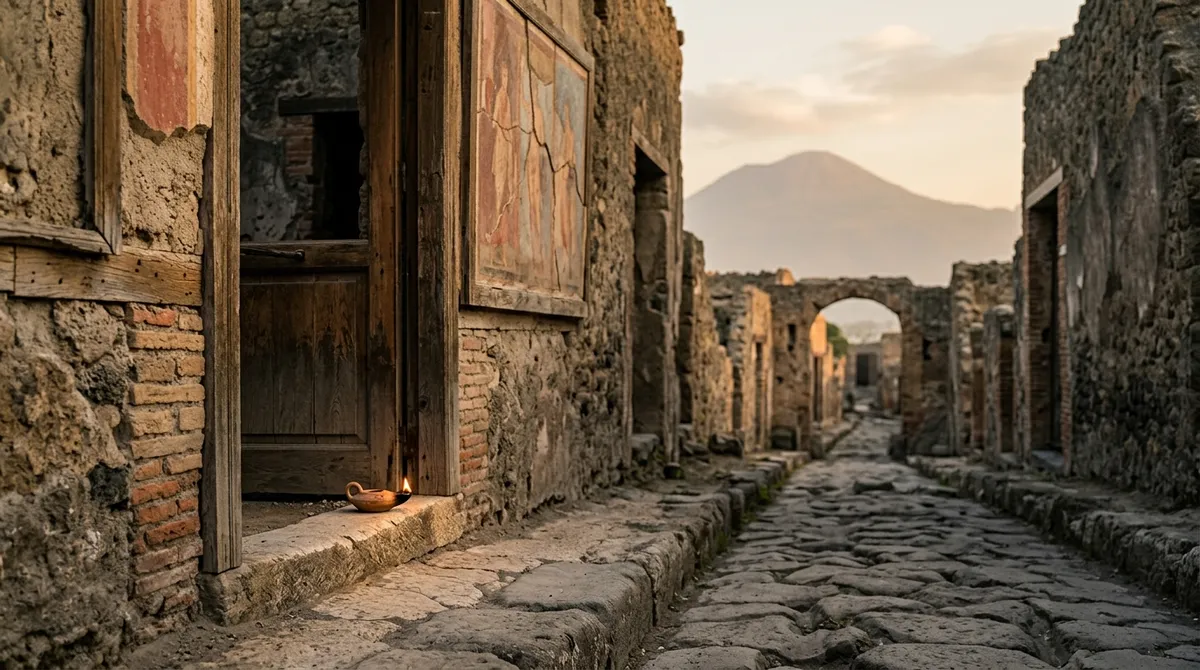
In a remarkable discovery, archaeologists have unearthed compelling evidence that life persisted in Pompeii after the catastrophic eruption of Mount Vesuvius in 79 AD. This groundbreaking finding offers new insights into how the ancient city adapted and survived in the wake of a natural disaster that buried it under volcanic ash and pumice.
Pompeii, famously frozen in time after the eruption, has long been a source of fascination for historians and archaeologists. Recent excavations, however, reveal that the city might not have been abandoned immediately as previously thought. Instead, signs of life and recovery have emerged, challenging longstanding assumptions about the aftermath of the disaster.
Post-Eruption Pompeii: A Story of Resilience
The new findings indicate that Pompeiians returned to their city to rebuild and resume their daily lives. Researchers have discovered evidence of repairs and modifications in several structures, suggesting that residents made efforts to restore their homes and businesses. This discovery paints a picture of resilience and determination among the survivors, who were willing to reclaim their city from the ashes.
Among the most telling signs of post-eruption activity are the remnants of support beams and makeshift structures. These findings reveal that the inhabitants were not merely surviving but actively working to reconstruct their environment. This evidence of reconstruction challenges the narrative that Pompeii was instantly deserted following the eruption.
Archaeological Techniques Unearth Hidden Clues
The recent discoveries were made possible through advanced archaeological techniques, including the use of ground-penetrating radar and careful excavation methods. These technologies have allowed researchers to identify previously hidden layers of occupation beneath the volcanic deposits. By analyzing these layers, archaeologists have been able to piece together a more accurate picture of life in Pompeii after the eruption.
Furthermore, the use of modern technology has enabled researchers to uncover artifacts and structures that were previously overlooked. These findings have been instrumental in reshaping our understanding of Pompeii's history and the resilience of its people.
The Human Element: Evidence of Daily Life
In addition to structural evidence, archaeologists have uncovered a variety of artifacts that provide a glimpse into the daily lives of post-eruption Pompeiians. Items such as pottery, tools, and household objects suggest that the city's inhabitants continued their routine activities despite the devastation surrounding them. These artifacts tell a story of a community striving to maintain a sense of normalcy in the face of adversity.
Moreover, evidence of food storage and preparation indicates that the Pompeiians were not only surviving but also thriving to some extent. The presence of grains, nuts, and other foodstuffs points to a community that was managing to sustain itself despite the challenges posed by the eruption's aftermath.
Reassessing Pompeii's Historical Narrative
This new evidence prompts a reassessment of the historical narrative surrounding Pompeii. While the eruption of Mount Vesuvius undeniably marked a turning point in the city's history, the notion that it was immediately abandoned is now being reconsidered. Instead, the evidence suggests a more nuanced story of survival and adaptation in the face of overwhelming odds.
The implications of these findings extend beyond Pompeii, offering insights into how ancient societies responded to natural disasters. By understanding the resilience and strategies employed by Pompeiians, modern communities can glean valuable lessons in disaster recovery and urban resilience.
Conclusion: A Testament to Human Tenacity
The discovery of post-eruption life in Pompeii serves as a powerful testament to human tenacity and adaptability. Despite facing a catastrophic event, the residents of Pompeii demonstrated an unwavering commitment to their city and their way of life. This newfound understanding of Pompeii's history not only enriches our knowledge of the past but also inspires a deeper appreciation for the enduring spirit of humanity.