Scientists have uncovered a surprisingly large hidden layer of human biology: more than 1,700 previously overlooked proteins produced inside human cells. These elusive molecules, often described as dark proteins, come from genetic regions once thought to be silent or unimportant. The discovery expands the known human proteome and could reshape how researchers study disease, immunity, cancer, and drug development.
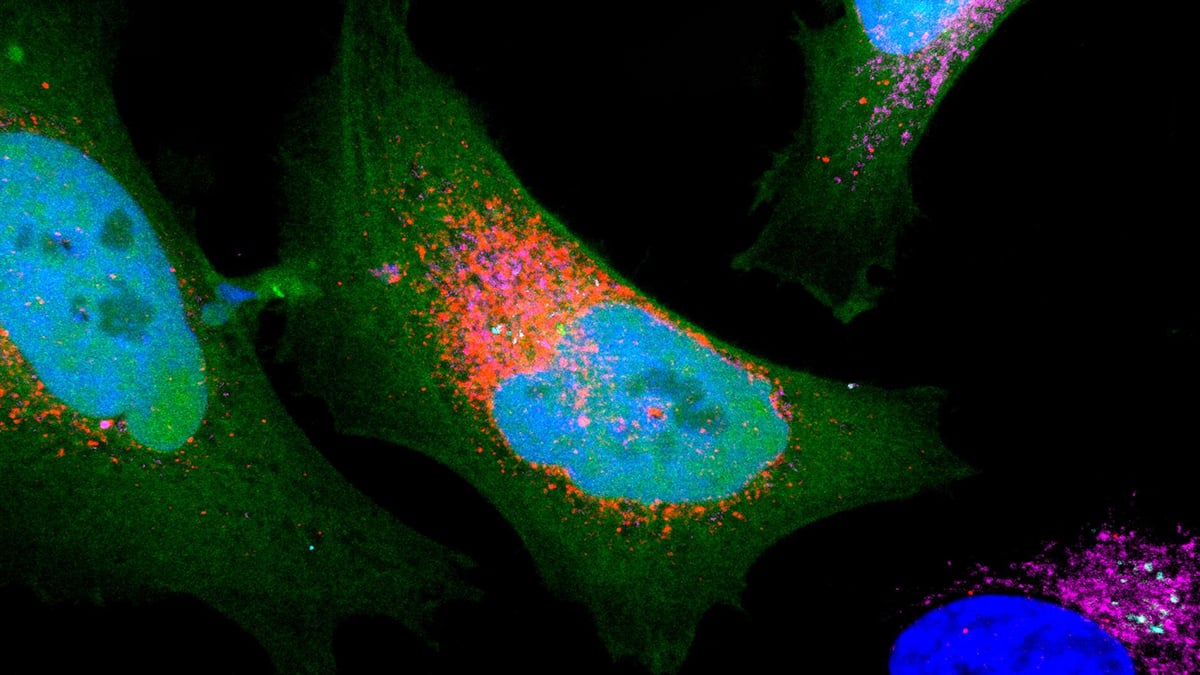
A hidden proteome inside familiar cells
For decades, biology textbooks have described the human genome as a blueprint for roughly 20,000 protein-coding genes. Those genes provide instructions for the proteins that build tissues, control chemical reactions, support immunity, and regulate nearly every process in the body.
Yet the genome is far more complicated than a simple list of known genes. Large portions of DNA were once labeled noncoding because they did not appear to make conventional proteins. Researchers now know that many of these regions are active. They can produce RNA, influence gene behavior, and, in some cases, carry instructions for tiny or unusual proteins.
The newly identified proteins belong to this overlooked biological territory. They are not part of the standard protein catalog used in most medical and genetic research. Instead, they appear to arise from unconventional reading frames, short genetic sequences, and regions previously dismissed as noncoding.
Why these proteins stayed hidden for so long
Dark proteins are difficult to find for several reasons. Many are very small, which makes them easy to miss during standard protein analysis. Others may appear only in certain cell types, during stress, or at specific stages of development. Some may be produced briefly and then quickly broken down.
Traditional genome annotation focused on longer, more obvious protein-coding genes. That approach was useful, but it also left gaps. Short open reading frames and unusual RNA transcripts often failed to meet the criteria used to define official genes. As a result, potentially important proteins remained outside mainstream databases.
Modern proteomics has changed the search. Scientists can now combine large-scale protein detection, ribosome profiling, transcript analysis, and computational screening. Together, these tools reveal whether cells are not only copying hidden genetic instructions into RNA, but also translating them into proteins.
This matters because protein production is the key step. A stretch of DNA may be active at the RNA level, but that does not always mean it creates a functional protein. The latest findings strengthen the case that many hidden sequences are translated into real biological molecules.
What makes dark proteins important?
Proteins are the working machinery of life. They move molecules, send signals, repair damage, fight infection, and help cells respond to their environment. Even a very small protein can have a major impact if it interacts with the right pathway.
The discovery of more than 1,700 dark proteins suggests that human cells may rely on a broader set of molecular tools than scientists previously recognized. Some of these proteins may regulate known cellular systems. Others may work in ways that have not yet been studied.
They may also help explain why certain diseases behave unpredictably. If a disease process involves proteins that are absent from standard databases, researchers may overlook important mechanisms. This is especially relevant in cancer biology, where abnormal gene activity can create unusual proteins that tumors use to grow, survive, or evade the immune system.
Potential links to cancer and immune detection
Cancer cells often activate unusual genetic programs. They may switch on genes that are normally silent, alter RNA processing, or produce abnormal protein fragments. These changes can create molecular markers that distinguish cancer cells from healthy tissue.
Dark proteins could be valuable in this context. If a tumor produces a hidden protein that normal cells do not make, that protein may become a potential biomarker. It could help doctors detect disease, classify tumor types, or predict how a patient might respond to treatment.
There is also growing interest in how hidden proteins interact with the immune system. Cells routinely display protein fragments on their surface, allowing immune cells to inspect what is happening inside. If dark proteins generate unique fragments, they may become visible to immune surveillance.
That possibility is important for immunotherapy. Treatments that train immune cells to recognize cancer depend on distinctive targets. Hidden proteins could expand the list of targets available for vaccines, engineered immune cells, or antibody-based therapies.
A broader view of the human genome
The finding also challenges an outdated view of noncoding DNA. Although not every stretch of DNA makes a protein, the boundary between coding and noncoding regions is less rigid than once believed. Some RNAs labeled noncoding may produce small proteins under the right conditions.
This does not mean every hidden protein has a crucial function. Some may be biological noise, temporary byproducts, or molecules with limited roles. Science will need careful experiments to separate functional proteins from incidental ones.
Still, the scale of the discovery is hard to ignore. More than 1,700 candidates represent a major expansion of the human protein landscape. Even if only a fraction prove essential, they could open many new research paths.
How scientists confirm hidden proteins
Finding a dark protein is not as simple as spotting a possible genetic sequence. Researchers need evidence that the sequence is translated and that the protein exists in cells. This usually requires several independent methods.
One approach examines ribosomes, the cellular machines that build proteins. If ribosomes actively read a short genetic sequence, it suggests that translation is occurring. Another method uses mass spectrometry, which can detect protein fragments and match them to genetic instructions.
Computational analysis then helps filter the results. Scientists compare candidate proteins across datasets, cell types, and experimental conditions. They also check whether the same protein appears in multiple samples, which increases confidence that it is real.
Even after detection, the next challenge is function. Researchers must learn where each protein is located, what it binds to, and what happens when cells lose or overproduce it. These steps can take years, especially for proteins with no known relatives.
Why drug discovery could benefit
Most modern medicines work by targeting proteins. Enzymes, receptors, transporters, and signaling proteins are common drug targets because they control biological activity. If dark proteins contribute to disease, they may provide fresh therapeutic opportunities.
New targets are especially valuable in conditions where current treatments fail. Cancer, neurodegenerative disease, autoimmune disorders, and rare genetic conditions all need better molecular maps. Hidden proteins could help fill missing pieces in those maps.
However, drug development will require caution. A protein must be validated before researchers can build therapies around it. Scientists need to know whether it causes disease, protects against disease, or simply appears alongside other cellular changes.
The most promising candidates may be those with clear disease-specific patterns. For example, a dark protein found mainly in tumor cells could be more useful than one found widely across healthy tissues. Specificity is critical for safe and effective treatment design.
The next phase of dark proteome research
The discovery raises many questions. Which dark proteins are essential for normal cell function? Which are active only during stress, infection, or disease? Do some help cells adapt to changing environments? Could others drive harmful processes?
Answering these questions will require collaboration across genomics, proteomics, cell biology, immunology, and medicine. Researchers will also need better databases that include noncanonical proteins. Without updated references, many hidden proteins may remain invisible in future experiments.
As more studies appear, the human proteome will likely become more detailed and more dynamic. Instead of a fixed catalog, scientists may view it as a flexible system that changes by tissue, age, disease state, and environment.
Conclusion
The discovery of more than 1,700 dark proteins shows that human cells still hold major surprises. These hidden molecules expand the known proteome and reveal that overlooked genetic regions may have meaningful biological roles. While much work remains, the findings could influence cancer research, immune therapy, biomarker discovery, and future drug development. The human genome has been studied for decades, but its deepest layers are still coming into focus.
#darkproteome #humangenome #proteomics #cellbiology